Budapest Committed to Advancing Sustainable Urban Logistics
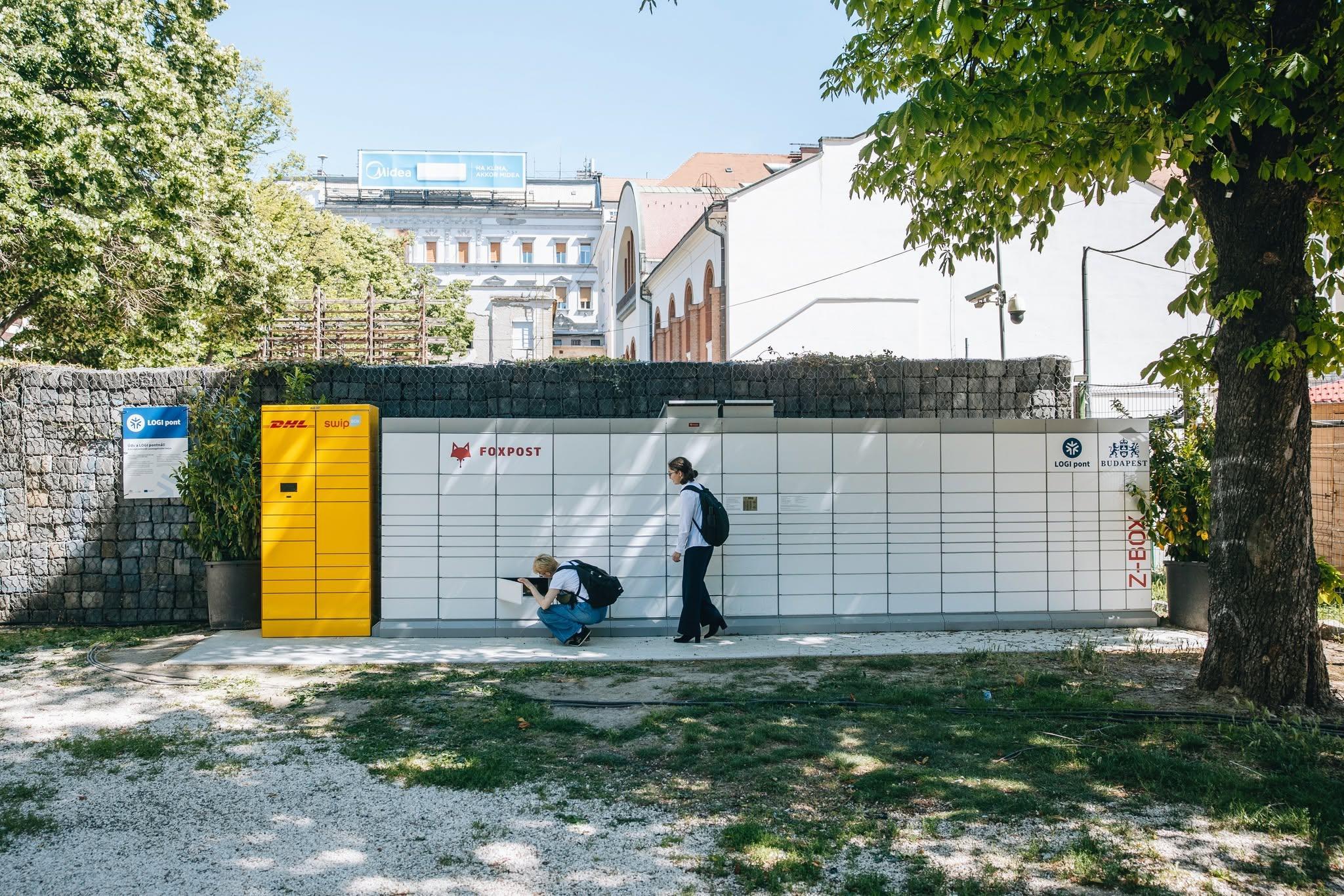
Budapest is committed to developing a modern and sustainable urban logistics system. Through a network of LOGI Points with a unified visual identity, the city aims not only to make goods deliveries more efficient but also to contribute to the improvement of public spaces.
As part of this initiative, the first LOGI Point has opened in City Hall Park (Városháza Park), serving as a pilot project for future developments. In the long term, Budapest is working towards solutions that reduce traffic congestion, noise, and air pollution while providing more convenient services for residents. But what exactly does this mean?
Rethinking Urban Logistics through the HungaAIRy Project: LOGI Points, Urban Hubs and Smart Loading
Urban freight transport is an invisible yet essential part of everyday life. As e-commerce continues to grow, an increasing number of delivery vehicles are appearing on Budapest's streets. While this brings greater convenience, it also places a significant burden on the urban environment. Delivery traffic in the city centre contributes to air pollution, noise, and congestion, all of which reduce the quality of urban life.
The LIFE IP HungaAIRy project addresses these challenges by improving air quality in several Hungarian cities, including Budapest. The capital's pilot actions focus on transforming urban freight transport and making city logistics greener through innovative solutions that reduce the environmental impact of deliveries.
To support this transformation, the Municipality of Budapest has established partnerships with parcel delivery service providers. Together, they are working to make delivery systems more efficient, predictable, and environmentally friendly. These partnerships focus on identifying data-driven and operational solutions that improve the planning of urban freight transport and lay the foundation for future developments.
What Is Urban Logistics and Why Does It Matter?
Urban logistics encompasses all processes related to transporting, distributing, and receiving goods within a city. This includes parcel deliveries, supplying retail stores, and handling online orders.
These processes have changed significantly in recent years. More people are ordering goods online, home deliveries have become more frequent, and city-centre streets are increasingly operating at their capacity limits. As a result, multiple courier vehicles often visit the same neighbourhood within a short period, creating parking difficulties and traffic congestion while increasing emissions and putting additional pressure on urban infrastructure.
HungaAIRy Solutions
As part of the project, Budapest is testing several innovative pilot measures to improve urban logistics. The city's objective is to establish solutions that can form the basis of a long-term, citywide logistics system.
1. Community Parcel Collection Points – LOGI Points
Parcel lockers and community collection points can play a key role in reducing the number of home deliveries and organising deliveries more efficiently. Instead of visiting individual addresses one by one, couriers can deliver and collect multiple parcels at a single location.
This approach offers several benefits. It reduces the number of delivery vehicles on the roads, lowers emissions and noise pollution, improves delivery efficiency, and provides users with greater flexibility when collecting their parcels.
Budapest's vision is to establish LOGI Points with a unified city identity that also contribute to the renewal and enhancement of public spaces.
The LOGI Point in City Hall Park serves as the pilot project for this concept, currently featuring parcel lockers operated by FoxPost and DHL. The goal is to make parcel collection a seamless part of everyday routines, allowing people to collect their deliveries easily while commuting to or from work.
2. Urban Consolidation Centres – LOGI Hubs
A LOGI Hub is an inner-city logistics consolidation centre that does not provide direct services to residents. Its primary role is to connect middle-mile transport with last-mile delivery.
Within the HungaAIRy project, Budapest is preparing to establish and test such an urban consolidation hub in cooperation with logistics providers. The aim is to create intermediate infrastructure that enables deliveries to be consolidated and coordinated before entering densely populated city-centre areas.
Parcels are temporarily stored and sorted at the LOGI Hub before being delivered to their final destinations by cargo bikes or low-emission vehicles. This reduces motor vehicle traffic in the inner districts, lowers emissions, and improves the efficiency of parcel handling.
3. Digital Loading Bay Reservation System
Managing loading activities in public spaces is becoming one of the most pressing challenges of urban logistics. Although digital loading bay reservation systems are not yet widely used in Hungary, international experience demonstrates that these innovative solutions can significantly improve urban freight operations.
As part of the HungaAIRy project, Budapest plans to pilot a digital loading bay reservation system. The system will collect data on loading activities, support the more effective planning of loading infrastructure, and contribute to more predictable delivery operations in the long term.
The planned mobile application will allow users to monitor loading bay availability, reserve loading spaces in advance, and reduce conflicts over public space. The system is also expected to decrease illegal parking and loading activities that obstruct traffic, helping to reduce congestion. Over time, it will also support data-driven planning of urban logistics processes.
How Will the City and Its Residents Benefit?
A well-designed urban logistics system delivers environmental, transport, and quality-of-life benefits that reinforce one another.
By reducing emissions and optimising delivery operations, air pollution and noise levels in the city centre can be significantly lowered, making Budapest a healthier and more liveable city. Better-organised vehicle movements also improve the use of public spaces while reducing environmental impacts.
The transport network benefits as well. Unnecessary traffic decreases, delivery operations become more predictable, and road capacity is used more efficiently. This improves not only logistics operations but also the overall functioning of the city.
Residents gain access to more convenient and flexible services. Deliveries fit more naturally into everyday routines while generating less traffic and environmental disturbance.
Small Decisions, Big Impact
Transforming urban logistics requires more than new infrastructure and technology. It also calls for a change in mindset among service providers, city authorities, and residents alike.
The HungaAIRy project aims to create a more efficient, predictable, and environmentally friendly urban freight transport system for Budapest. Solutions such as parcel lockers, urban logistics hubs, digital management systems, and low-emission delivery methods—including cargo bikes and electric delivery vans—all contribute to the same objective: fewer emissions, reduced traffic, and a more liveable city.
The HungaAIRy project's urban logistics measures are fully aligned with Budapest's long-term sustainable mobility, climate, and environmental objectives. The goal is to reduce unnecessary vehicle movements, encourage cleaner delivery methods, and promote a more organised and people-friendly use of public spaces.
The cooperation between the city and logistics providers demonstrates that innovative solutions and strong partnerships can successfully transform urban logistics—creating benefits for everyone: the city, businesses, and the people of Budapest.
Source: budapest.hu


