Results from Our Partner Network: Cleaner Air in Miskolc – The Combined Impact of Regulation, Composting and Awareness-Raising
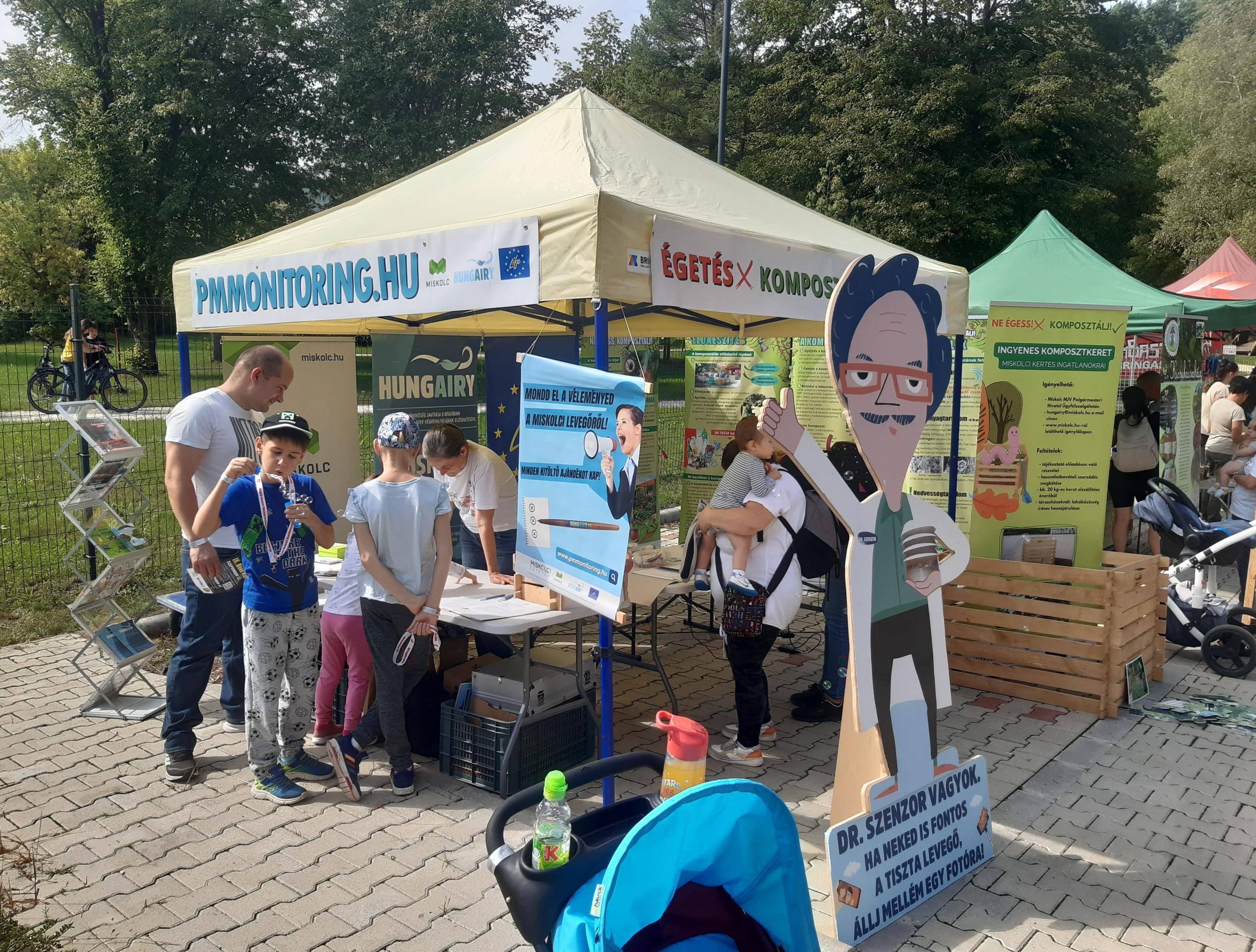
One of the key objectives of the HungAIRy LIFE Integrated Project is to support participating municipalities in developing local solutions that contribute to long-term improvements in air quality. To this end, the Municipality of Miskolc has implemented a comprehensive package of measures combining local regulation, enhanced enforcement, public awareness-raising, support for composting and modern air quality monitoring. The programme's primary objective is to reduce the open burning of garden green waste, thereby improving air quality and protecting public health.
Regulation and Enforcement Hand in Hand
The open burning of garden green waste can significantly increase PM2.5 concentrations, particularly during the autumn and winter months. To address this issue, the Municipality of Miskolc introduced a ban on the burning of leaves and garden waste in September 2020, establishing a clear legal framework for protecting air quality.
However, the effectiveness of the regulation depends on more than the ban itself. Its introduction was accompanied by a comprehensive information campaign explaining the health and environmental impacts of emissions from open burning while presenting environmentally friendly alternatives.
Compliance with the regulation is supported by the continuous presence, inspections and public outreach activities of the Miskolc Municipal Enforcement Service (MIÖR). In the city's most affected neighbourhoods, municipal officers not only carry out inspections but also distribute information materials and provide guidance to residents, helping ensure that as many people as possible become familiar with the new regulation.
Experience gained during the project has shown that this integrated approach has been effective. The local enforcement service plays a key role in identifying illegal burning activities and supporting official procedures, while residents have also become increasingly aware of and responsive to violations.
Composting as a Sustainable Alternative
Alongside regulation, it was equally important to provide residents with an accessible and environmentally friendly alternative. To support this, the Eco-Manager Office established within the project provides free compost frames for residents of Miskolc. Interested applicants can collect their compost frames after attending a short introductory presentation.
Since the programme was launched, 2,453 compost frames have been distributed. However, the initiative extends well beyond simply providing equipment. During personal site visits, the Eco-Manager Office staff help residents make proper use of their compost frames while also introducing other sustainable gardening practices, such as mulching and the creation of raised garden beds. These visits also provide an opportunity to showcase successful household practices that can inspire others to adopt similar environmentally friendly solutions.
Raising Environmental Awareness Through Active Public Engagement
Strengthening environmental awareness has been one of the central elements of the Miskolc programme. Throughout the year, the Eco-Manager Office staff provide personalised support in person, by telephone, online and in writing, answering questions related to air quality, composting and sustainable household practices.
The project's communication activities have been both extensive and targeted. With the support of MIKOM Nonprofit Ltd., as well as local newspapers, radio stations and online media, approximately 3,000 communication outputs have been published since the project began. Through the Green Miskolc social media platform alone, messages promoting cleaner air have reached more than 160,000 people.
Direct engagement with residents has also been a defining feature of the programme. Project staff have met members of the public on around 500 occasions through compost frame distribution events, activities in schools and kindergartens, city events, environmental awareness days and partner events. These occasions provided valuable opportunities to explain the health and environmental impacts of air pollution while introducing composting and other sustainable alternatives.
Real-Time Air Quality Information
Another important achievement of the HungAIRy project is the urban air quality monitoring network established in cooperation with the University of Miskolc. The system consists of 60 monitoring units installed across different districts of Miskolc and neighbouring settlements, continuously measuring PM2.5 concentrations and providing real-time information for both residents and experts.
The data are publicly available via the PM Monitoring website and mobile application. The Eco-Manager Office also plays an active role in interpreting the results and communicating the findings to the public.
The monitoring network serves purposes beyond public information. Each year, the project analyses residents' reports, official enforcement actions, the locations of illegal burning incidents and the experiences gained through the composting programme. Based on these findings, the municipality identifies the neighbourhoods where enhanced enforcement or more intensive awareness-raising activities are needed. This enables the programme to continuously adapt to local experience and emerging challenges.
A Good Practice for Improving Air Quality
The Miskolc pilot programme demonstrates that lasting improvements in air quality can only be achieved through a combination of complementary measures. Local regulation, consistent enforcement, support for composting, continuous awareness-raising and a modern air quality monitoring network together form an integrated system that not only reduces air pollution caused by the burning of garden green waste but also strengthens environmental awareness among residents.
One of the project's most important lessons learned is that effective interventions require continuous evaluation. Based on annual assessments, the programme regularly reviews its measures and adjusts future awareness-raising campaigns, enforcement activities and support schemes in line with practical experience. This continuous learning approach makes the Miskolc model a good practice that can serve as an example for other municipalities seeking to improve air quality through integrated local action.


