Results from Our Partner Network: Putting Kaposvár on the Air Quality Map
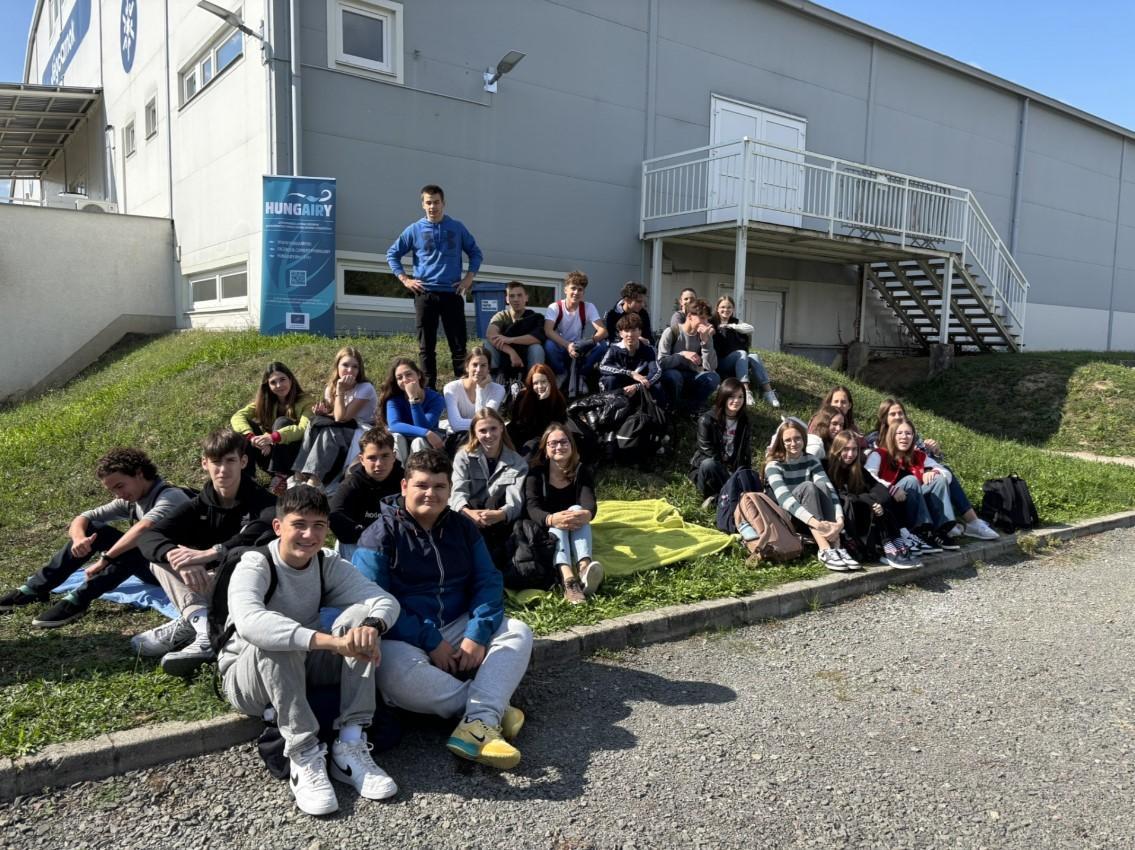
The LIFE IP HungAIRy project was launched in 2019 as an eight-year programme supported by the European Union, with the overarching goal of improving air quality across Hungary. In Kaposvár, the project has delivered a range of important developments, including the establishment of a new air quality monitoring station, the deployment of air quality sensors and the work of a local eco-manager dedicated to raising environmental awareness.
The city has also actively promoted sustainable transport and environmentally conscious lifestyles through community programmes and educational initiatives – efforts that continue in 2026. Beyond improving air quality, these actions contribute to creating a healthier and more liveable urban environment in the long term.
What does this mean in practice? A carefully planned process built step by step over several years, the results of which are already clearly visible today.
High-Resolution PM Monitoring Network in Miskolc and Kaposvár
One of the HungAIRy project partners, the University of Miskolc, established a high-resolution particulate matter (PM) monitoring network in Miskolc and Kaposvár to measure pollution caused by fine particulate matter (PM10 and PM2.5).
By the end of 2022, twenty monitoring units had been installed across Kaposvár, covering the entire city from residential neighbourhoods to busy traffic junctions. The objective was not only to collect data but also to make air quality information more accessible and understandable for residents.
The monitoring results are available to the public through the PM Monitoring website under the Kaposvár section.
New Air Quality Monitoring Station
As part of the project, new automatic air quality monitoring stations were installed in two partner cities – Békéscsaba and Kaposvár – where no such stations had previously been in operation. In Kaposvár, the station began operation on 5 July 2023.
Initially, the station was operated by the Baranya County Government Office, before responsibility was transferred to HungaroMet Nonprofit Ltd. Today, the station forms part of Hungary’s National Air Pollution Monitoring Network, enabling continuous monitoring of air quality and providing more accurate information about potential sources of pollution.
The station measures key air pollutants around the clock, including ozone, nitrogen oxides, particulate matter, sulphur dioxide and carbon monoxide, alongside meteorological parameters.
As a result, Kaposvár has effectively been placed on the air quality map. Air quality trends can now be assessed not only at the local level but also in comparison with data from across the country. Following validation and processing, the data are publicly available on the website of HungaroMet Nonprofit Ltd.
In addition to informing residents, the new monitoring data support local decision-making and provide a stronger foundation for future air quality planning.
Raising Awareness Through the Eco-Manager Network
Data alone cannot improve air quality. Recognising this, the HungAIRy project established a network of eco-managers to support the coordination of local air quality improvement measures.
In practice, eco-managers act as a bridge between experts and the public. Their role extends beyond interpreting monitoring data; they also help explain its significance and encourage people to take action. One of the greatest challenges has not been measuring pollution itself, but bringing the issue closer to everyday life and helping residents understand how their choices can make a difference.
Over the past few years, a growing number of initiatives in Kaposvár have directly engaged local communities. These include the popular Cyclists’ Breakfast events, where commuters arriving by bicycle are welcomed with pastries and refreshments.
Environmental awareness activities are also regularly organised at the Klímakuckó environmental education centre, which hosts presentations and interactive programmes, particularly for children.
In addition, environmental and clean air events held in the City Park focus on highlighting the connection between daily decisions and air quality. Campaigns encourage proper heating practices, composting and sustainable transport choices, emphasising that meaningful change begins at household level.
Looking Ahead
The LIFE IP HungAIRy project will continue until the end of 2026, but in Kaposvár it is already clear that the initiative represents far more than a one-time investment.
The monitoring networks, professional partnerships and community programmes established through the project together form a sustainable system with long-term benefits. As a result, many of the achievements realised in recent years are expected to remain in place and continue supporting cleaner air and a healthier urban environment long after the project has officially concluded.


