Air Quality in Pécs Schools Can Change Significantly Within Just a Few Lessons
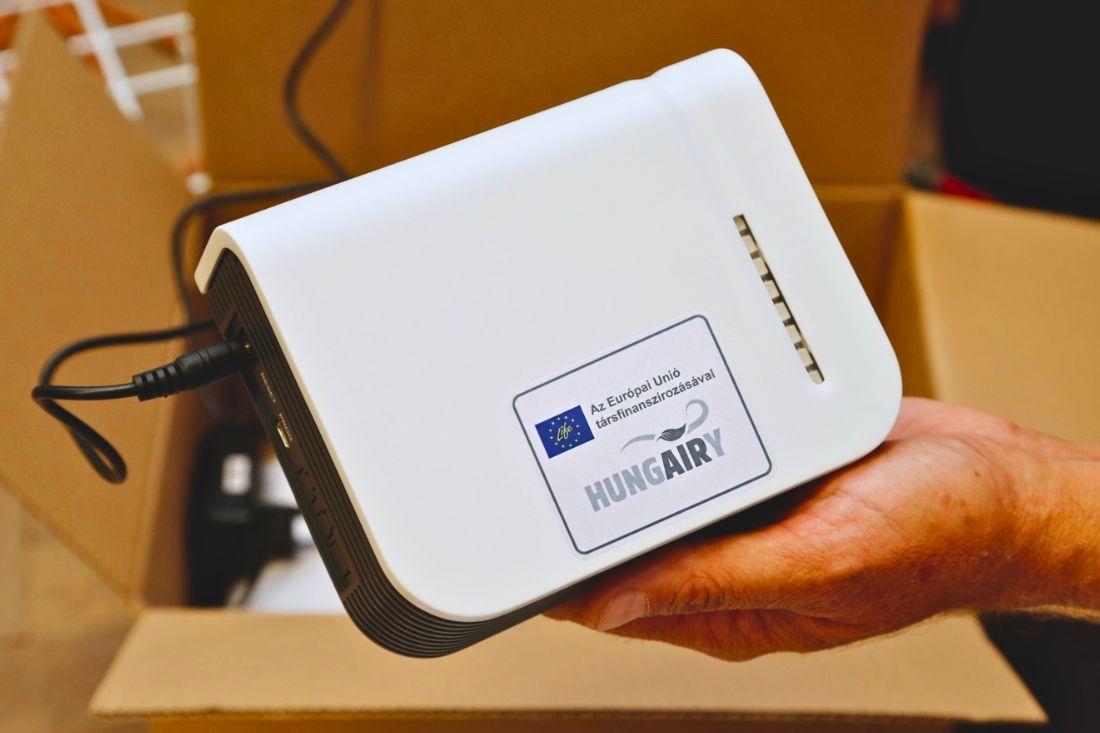
As part of the HungAIRy LIFE Integrated Project, a pioneering building energy pilot programme is underway in educational institutions in Pécs. Within the framework of the programme, a special monitoring system has been installed to examine, measure and assess indoor air quality in school and kindergarten buildings, with the aim of developing the most effective possible ventilation protocols.
The selected kindergartens and schools in Pécs are located in three renovated and three non-renovated buildings. Indoor air quality monitoring systems are already operating in a total of 73 classrooms and kindergarten activity rooms. The monitoring units use colour codes to indicate current indoor air quality conditions, allowing teachers to see in real time when ventilation is needed.
In addition, one weatherproof outdoor sensor has been installed on each building. These sensors are connected to the entire monitoring system, making it possible to compare outdoor air quality with indoor air quality data. The measurements taken by the sensors every minute are stored on a server, where they are analysed and evaluated. The resulting data are then used to develop the above-mentioned ventilation protocols.
This is important because maintaining optimal indoor conditions during lessons and group activities is essential for ensuring that children can concentrate properly. Temperature, humidity and carbon dioxide levels must remain within optimal ranges, while concentrations of fine particulate matter (particulate matter) and volatile organic compounds (VOCs) must also remain below certain thresholds.
The project's experts have so far processed data collected during the measurement period between 5 January and 19 June this year. Based on the results, they have created so-called heat maps, which use colours to illustrate how carbon dioxide levels in the air change at different times of the day. On the heat maps, green indicates values below 1,200 ppm, yellow represents values between 1,200 and 1,500 ppm, while red indicates values above 1,500 ppm. The results show that nearly three-quarters of the measurements recorded carbon dioxide concentrations below 1,200 ppm.
The data also revealed several interesting patterns:
- During the winter months, particularly in January and February, higher values occurred more frequently, while the overall situation improved by June.
- In the morning, especially between 9:00 and 11:30 a.m., carbon dioxide concentrations increased in several rooms. This clearly demonstrates that air quality can change significantly within just a few lessons.
- The aim of the measurements is therefore to help identify periods when indoor air quality deteriorates and provide practical guidance for developing appropriate everyday ventilation habits.
(Source: pecsma.hu – Dávid Pemecker)

