Eight years of working for cleaner air – the role of HungaroMet Nonprofit Zrt. in the HungAIRy project
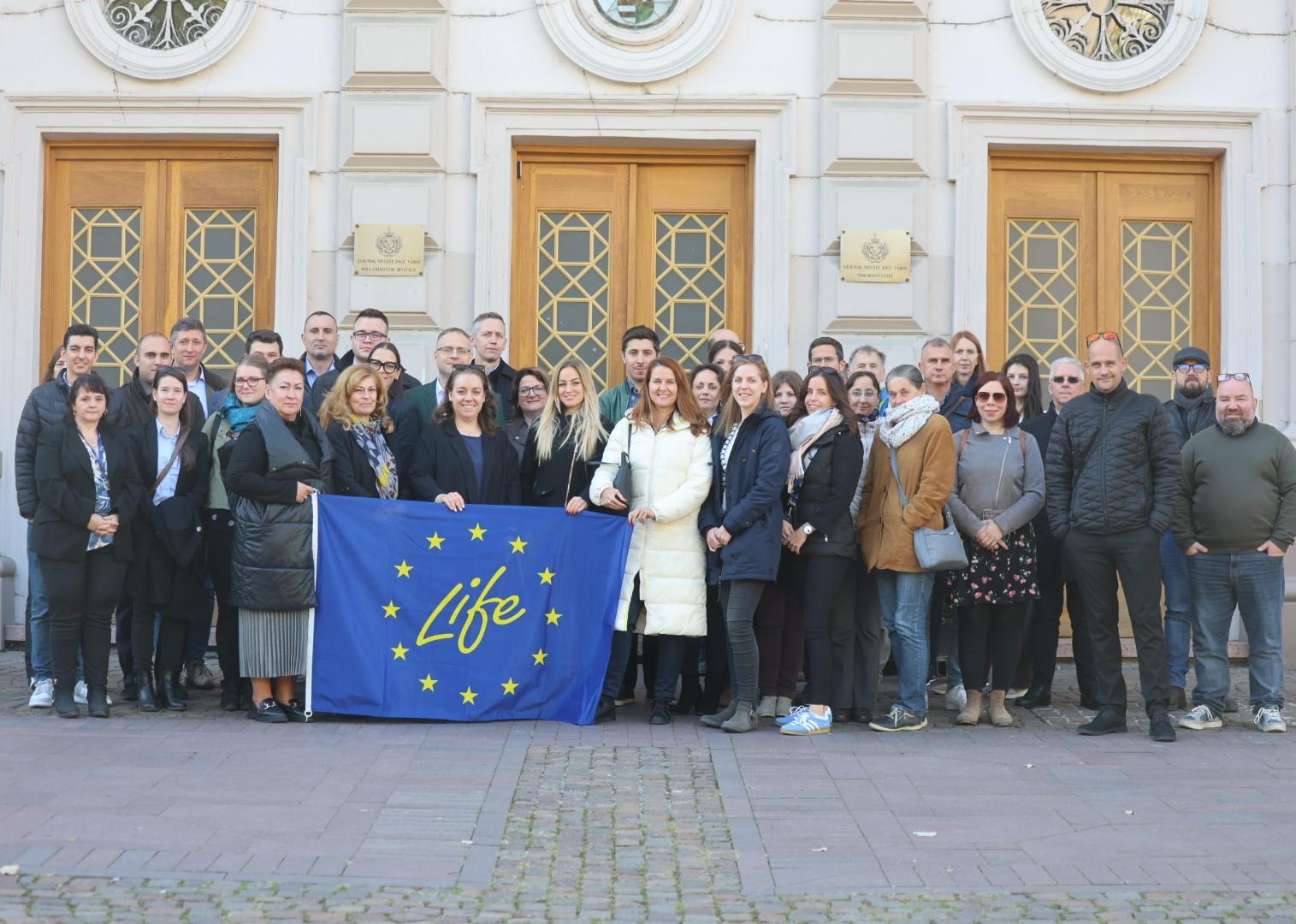
Improving air quality is a complex task that requires coordinated efforts across a wide range of areas, from accurate measurement and modelling data through local measures to raising public awareness. The LIFE IP HungAIRy project, launched in 2019, implemented this comprehensive approach by supporting the implementation of air quality plans and the reduction of air pollution in ten Hungarian municipalities.
Throughout the eight-year project, the Hungarian Meteorological Service and, from 2024 onwards, its legal successor, HungaroMet Hungarian Meteorological Service Nonprofit Zrt., carried out key professional tasks. From 1 January 2024, HungaroMet also took over the responsibilities of the project’s coordinating beneficiary.
Eco-Managers: professional expertise at local level
One of the most important achievements of the LIFE IP HungAIRy project was the establishment of the Eco-Manager network. By the end of the project, 19 Eco-Managers were working in 10 partner municipalities and at 2 municipal companies, supporting the implementation of local air quality measures.
The Eco-Managers serve as a link between municipalities, residents and professional organisations. They contribute to the implementation and review of air quality plans, organise awareness-raising programmes and support municipalities in making environmental decisions.
The network is coordinated by the Eco-Manager Knowledge Centre operating within HungaroMet. Through regular training sessions, professional consultations and a digital knowledge base, the Knowledge Centre provides Eco-Managers with a consistent professional background and promotes the sharing of good practices nationwide.
Measurement and modelling: the basis for informed decisions
One of HungaroMet’s key tasks was the development of the air quality monitoring network. During the project, the K-puszta background air pollution monitoring station was upgraded, while new automatic monitoring stations were established in Békéscsaba and Kaposvár. HungaroMet provided professional support in selecting the locations of the monitoring stations.
The stations continuously measure the concentrations of the main air pollutants – including ozone, nitrogen oxides, sulphur dioxide, carbon monoxide, PM10 and PM2.5 – as well as meteorological parameters. As a result of these developments, the range of validated air quality data available for analysis was expanded, providing long-term support for the assessment of air quality in Hungary. By the end of the project, HungaroMet had taken over the operation of the monitoring stations.
The ATMO-Plan decision-support application is also based on measurement data. The tool was developed by the Belgian research institute VITO for Hungarian conditions as part of the HungAIRy project. It can be used to model in advance the expected air quality impacts of measures related to transport and residential heating, supporting informed decision-making by municipalities. HungaroMet experts also contribute to the operation of the system in Hungary and to the updating of its background data.
Coordination and awareness-raising: common messages for cleaner air
As the coordinating beneficiary of the HungAIRy project, HungaroMet was responsible not only for coordinating the professional work, but also for supporting cooperation among the partners. Training sessions and professional and coordination meetings provided opportunities for sharing experience. The company also provided communication and PR support to the partners, contributed to the development of the project’s unified visual identity and communication strategy, and supported the preparation of press releases, articles and social media content. An important aspect of the coordination work was also ensuring that the local achievements and initiatives of the partners became visible at national level.
HungaroMet also contributed to the project’s objectives through its own awareness-raising activities. At events, family days and various outreach activities, the organisation engaged directly with the public, focusing on knowledge and practical advice related to air quality protection and environmentally conscious lifestyles.
National campaigns were also an important part of the project’s awareness-raising activities. The TekAIR campaign series promoting cycling used fun, community-based programmes to highlight the link between environmentally friendly transport and cleaner air. Several HungAIRy partners joined the “Don’t just TekAIR, see as well!” and “TekAIR it around!” initiatives with their own local programmes, helping the national messages reach communities in numerous municipalities.
The public’s opinion also matters
Improving air quality cannot be achieved without the active involvement of the public. As part of the HungAIRy project, nationally representative surveys were conducted to explore public knowledge and attitudes concerning air quality.
According to the 2026 representative survey, almost half of the respondents believe that air quality in their area of residence has improved over the past ten years, while many continue to regard air pollution as an important environmental challenge.
The results provide valuable feedback for planning future awareness-raising programmes and local measures, while also helping to better understand public expectations regarding air quality.
Good practices for developing air quality plans
One of the key objectives of HungAIRy was to support the practical implementation of air quality plans. To this end, a series of professional events was organised throughout the project to support the work of municipalities and environmental professionals.
At professional workshops presenting good practices, participants learned about Hungarian and international examples in areas including transport, residential heating, green spaces and other air quality improvement measures. The solutions presented provided practical support for planning and implementing local measures.
Professional roundtable discussions on air quality plans strengthened cooperation between authorities and municipalities. Participants jointly assessed the experience gained from reviews, shared good practices and formulated proposals for further developing the planning process.
International cooperation for cleaner air
Air pollution does not stop at national borders, which is why the exchange of international experience and knowledge also plays an important role in improving air quality. In recent years, the HungAIRy project has built an increasingly broad professional network in which Hungarian, Slovak, Polish and Slovenian partners have worked together to develop air quality planning and emission reduction measures.
HungaroMet organised two international conferences, providing a forum for researchers, policymakers and air quality experts from numerous European countries to discuss the latest results and practical solutions. International workshops and professional meetings also supported the exchange of experience among participating LIFE Integrated Projects and helped strengthen long-term cooperation.
One common goal: cleaner air in Hungary
Over the eight years of HungAIRy, HungaroMet contributed to the project’s success through measurement, monitoring, coordination and knowledge-sharing activities. From 2024 onwards, as the coordinating beneficiary, it also took over the management of the partnership, ensuring the professional continuity of the project.
The legacy of HungAIRy lies not only in the infrastructure and tools developed, but also in the knowledge and cooperation established through the project. These will continue to support efforts to improve and protect air quality in Hungary beyond the end of the project.


